Australia's diaspora story
2026-07-01
Ma Guodong, 89, carefully unfolded the yellowed stationery but ran into trouble. The Chinese, who was born in Australia and grew up with a Western-style education, could not recognize the strong brush letters on the letter.
The old letters were salvaged from a pile of old objects to be thrown away by Ma Guodong when the old company, Yongxin, moved from Chinatown in Sydney's Jubilee to a new location. He had a vague feeling that he should preserve them, but he could not say where the obsession came from.
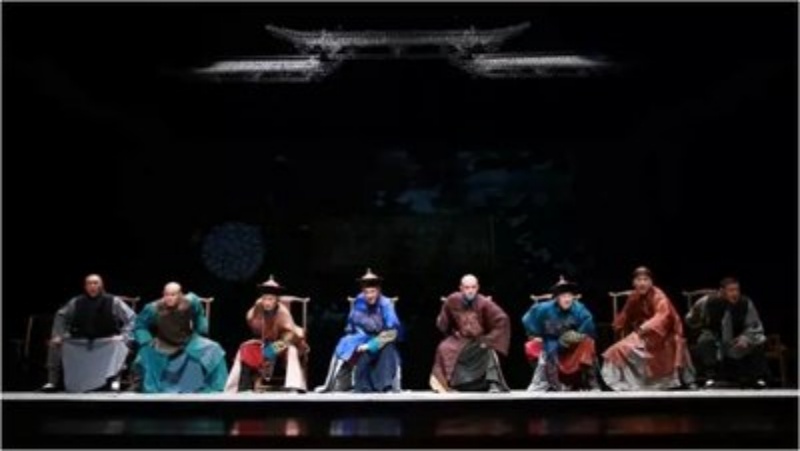
Until recently, he had known that this was the diaspora petition - the letters and remittances sent by overseas compatriots to their families back home, as well as their replies. Recently, the Chinese film "Love Letters to Auntie" is being released in Australia, and the Chinese community has become a hot topic of discussion.
"This letter is from Mr. Ma Yongxin, one of the founders of the Forever Life Company, to your grandfather, Ma Xinqi." Dr Susan Chen, senior lecturer in the School of Art and Design at the University of New South Wales, pointed to the handwriting on the letter, explaining one by one, "In the letter, he introduced a young man from his hometown of Zhongshan, Guangdong province, to his ancestral nephew, Ma Xinqi, who was then Xiangli of the Yongsheng company, who was 'talented and talented' and recommended him to work in the company."
According to Chen Shuxia, letters sent back by overseas Chinese with remittances are called "overseas letters" in the areas of Chaoshan and Fujian, while Chinese in Australia, mainly from Guangfu areas such as Wuyi, call them "golden letters" or "silver letters." In the early years, most of the Chinese who came to Australia were gold miners, and some of the letters did carry gold sands or gold coins, which the returning Chinese carried back to their homeland.
With the increasing demand for transfers, Chinese merchants such as Yongsheng, Guang Hechang, and the Chinese Chamber of Commerce have also begun to use their international trade and financial networks to provide gold and credit services. Sheng Shi department store, which Yongsheng opened in Shanghai in 1917, already offers money transfer and insurance services and is one of the domestic sites of the credit and debit network.
Ma Guodong learned that while silver letters are not the main business of immortality, they are very important.“It means a connection to hometown. The early Chinese struggled alone in white society and sent their savings of hard work to their hometowns. In merchants like Yongsheng, they are popular, and they can speak Chinese, even their home dialect.”
Professor Liu Jin, dean of the Institute of Overseas Chinese Culture and Regional Country Studies at the University of Wuyi, has devoted many years to studying the overseas Chinese market. Compared with Southeast Asia, overseas Chinese in Australia have long used the modern financial system to send money, but the content of letters does not escape household topics such as food, clothing, housing and transportation. "Every word and penny sent back is a sincere feeling, a 'love letter to Mammy'."
There's a family in the silver letter. Yuan Yixiushu, an Australian Chinese citizen, advised her son that one portion of the money sent back was earmarked for school fees. His wife wanted to go to a girls' school, and he fully supported:“Enrolling in girls' schools at an early age, focusing on learning, will naturally make progress. When I have a spare time, I teach my sister at home to learn arithmetic, arithmetical, and national languages as usual every day.”
There are also national and world affairs. In 1936, Australian Chinese citizen Kwong Shuliu wrote to his son and daughter, Predicting the situation with a sincere determination: "The world is in turmoil now, and all countries are preparing their arms for a war, the Second Great War in the world, that is, at the present time, this war is in the Far East, and China will take charge of it, and the battlefield is on Chinese territory..." "We must revitalize indigenous goods, and don't buy cheap goods from a certain country. Buying goods from some country is like helping money and bullets from some other country to shoot us Chinese. Although goods from any other country are sent to us, we must not want them. We Chinese must unite with one another to determine the deaths of some other country, and not allow him to oppress us too much..."
"Letters of affection, life details, and suffering may be trivial to historians, but to the people who wrote and received them, this is their life." Chen said the common content of these letters reflects the overall situation of the Chinese community in a particular era and is very helpful for historical research.
Liu Jin said that by reading the overseas commentaries, we can understand how the early Chinese courageously went to the world, forming a powerful network with both a sense of homeland and a vision of the world, and building a bridge between China and the world.
"It is important for future generations to preserve these letters." "They can tell from these records where their roots are," Ma said. "It may not be prestigious, but it's something they can be proud of." (Looking ahead to a new era)
Edit:Liang Yuhan Responsible editor:Wanzi
Source:Xuexi.cn
Special statement: if the pictures and texts reproduced or quoted on this site infringe your legitimate rights and interests, please contact this site, and this site will correct and delete them in time. For copyright issues and website cooperation, please contact through outlook new era email:lwxsd@liaowanghn.com

 Recommended Reading Change it