"Artificial Intelligence+" Moving Towards Scalable Implementation
2026-06-23
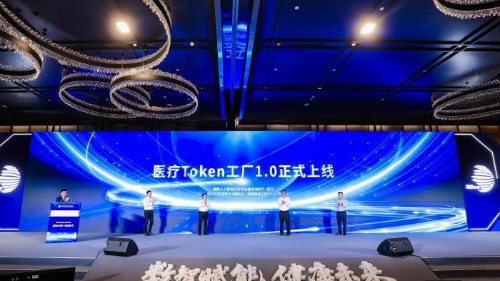
"AI +" is moving from the application of a single point of technology to the large-scale deployment of open source models that have failed and the open ecosystem has become a reality. Open-source models have broken the technological monopoly held by a small number of closed-source models. An open ecosystem has further enabled the deep dissemination of model capabilities to platforms, tools, scenarios, organizations, and developers, driving AI from availability to large-scale application. At the recent AI+Ecosystem Conference, Shan Zhi-guang, Director of the Department of Information and Industry Development of the National Information Center, stated that artificial intelligence has fully transitioned from the training phase to the inference phase. The exponential increase in the number of token (word units) calls is the most direct quantitative indicator of the scalable application of AI. Tokens are no longer just technical units used by large models to process text; they have become a new type of economic unit that integrates power, computing power, model services, and application value. This shift promotes the evaluation criteria for AI infrastructure from focusing on peak computing power to considering unit energy efficiency, cost-effectiveness, and scenario service capabilities.With its comprehensive advantages of computational power and energy infrastructure, diverse industrial scenarios, and an active open ecosystem, as the “Artificial Intelligence+” initiative deepens, China is expected to be the first to achieve a transition from technological breakthrough to large-scale implementation of AI, thereby establishing a comprehensive industrial competitive advantage.Huo Jinjie, president of IDC (International Data Corporation) in China, analyzed that the global AI industry is entering the strongest IT growth super cycle since the wave of mutual networking. This round of growth is not driven solely by the expansion of a single technology, but by the simultaneous development of AI computing power and the implementation of applications. IDC predicts that by 2029, the market size for generative AI in China will approach $100 billion, with a compound annual growth rate (CAGR) of 68% from 2024 to 2029. China will become one of the most active AI application markets globally. Peng Zhen, Chairman of Langchao Information, believes that the AI industry revolution has, for the first time, altered the definition of a worker.As agents (intelligent entities) become a crucial component of a company’s productivity, the focus of AI-native transformations is shifting from individual efficiency to organizational evolution. Enterprises need to incorporate intelligence into their organizational management systems and promote the expansion of management objects from traditional people, assets and goods to people, digital employees, data and intelligence capabilities. Around this change, Peng Zhen proposed the concept of Humagent (person + agent) organization. This means that enterprises are evolving from managing individuals to managing Humagents. By redefining positions, roles, permissions, responsibility boundaries, and performance evaluation criteria, they can maximize the intellectual contributions of AI within the organization while ensuring the stability, efficiency, and cost-effectiveness of business operations. In response, Peng Kaiping, dean of the Institute of Global Industry at Tsinghua University, stressed that the ultimate goal of technological progress is to promote human well-being rather than replace human values. In the age of intelligence, aesthetics, creativity and empathy are core human characteristics, and intelligent bodies and humans are naturally complementary, with the former undertaking standardized and deterministic execution work, and the latter focusing on aesthetic creativity, strategic decision-making and emotional connections, jointly building a new organizational evolution picture of human-machine synergy. The open source model solves the problem of the inclusive supply of intelligent capabilities, open tools achieve the overall reduction of development thresholds, and enterprise platforms handle the execution closed loop of intelligent elements into production systems.From model capabilities to tool chains, from enterprise platforms to organizational governance, the open ecosystem is paving an essential path for the widespread application of China’s AI industry.The head of Kimi Grand Model said that the rapid development of China's open source model is breaking the pattern of cutting-edge intelligence capabilities concentrated on a few closed-source platforms, enabling more enterprises, developers and industry users to invoke, adapt and reinvent based on the same technology base. Model competition is no longer based on absolute capacity, but on how much effective performance and task value can be generated per unit time, per unit Token, per unit cost.In the era of AI-native capabilities, enterprises are shifting from “process-driven” to “task-driven,” and from “system coordination” to “intelligent collaboration.” Wang Shengjie, a senior product expert at Tencent, believes that the current bottleneck in enterprise smart enterprise implementation has shifted from understanding capabilities to execution capabilities, and enterprises need more digital employees who can work, reliably and controllably. From understanding to execution, this is a qualitative change from "can talk" to "can be."Peng Zhen stated that, within the Humagent framework, an enterprise’s ultimate goal is not only to pursue the intellectual achievements of Agents, but also to build an AI-native organization with autonomous evolution capabilities. In the future, the deep convergence of human and machine intelligence will jointly define a new form of business civilization that is more resilient and more creative. (Looking ahead to a new era)
Edit:Momo Responsible editor:Chen zhaozhao
Source:Economic Daily
Special statement: if the pictures and texts reproduced or quoted on this site infringe your legitimate rights and interests, please contact this site, and this site will correct and delete them in time. For copyright issues and website cooperation, please contact through outlook new era email:lwxsd@liaowanghn.com

 Recommended Reading Change it