Collaborative construction of integrated computing infrastructure across the entire chain
2026-06-10
Currently, artificial intelligence is accelerating from text interaction and interactive intelligence to multimodal interaction and execution intelligence, and the demand for computing power continues to rise. At the same time, frequent natural disasters and increasingly complex geopolitics worldwide have put unprecedented demands on the real-time response capability of computing power. However, the existing computing power facilities are highly dependent on ground infrastructure, and there are obvious coverage blind spots in areas such as remote seas, polar regions, and deserts, with insufficient resistance to destruction. On one hand, there is explosive growth in demand, and on the other hand, there is a blank space covered by computing power. How to bridge this gap?
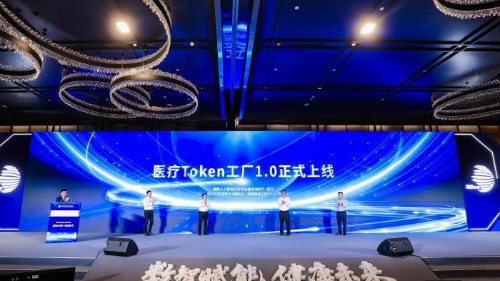
Building an integrated computing infrastructure that covers both space and the ground is the key to breaking through the impasse, "said Meng Xiangfei, Secretary of the Party Group and Chief Scientist of the National Supercomputing Tianjin Center. By extending computing deployment from the ground to space, it is expected to fundamentally eliminate coverage blind spots, enhance system resilience, and meet the dual needs of real-time response and scale expansion. Recently, at the 2026 World Intelligence Industry Expo, the Joint Research and Development Conference on Artificial Intelligence and Space Intelligence Infrastructure was officially established. This research and development project focuses on China's integrated computing infrastructure, striving to achieve breakthroughs in key technological fields through full chain collaborative innovation.
The newly established joint research and development team focuses on key common technologies such as productization of on-board super computing power payloads, in orbit intelligent processing units, satellite ground collaborative scheduling, and autonomous operation and maintenance of space systems, with the aim of building a ground sky integrated super intelligent data fusion infrastructure for computing power collaboration, task collaboration, and data collaboration.
Meng Xiangfei introduced that moving mature computing facilities from the ground to space faces multiple challenges.
Power supply is the first hurdle. At present, the world's largest artificial satellite has a power generation of 25 kilowatts, while the demand for future space-based super intelligent devices will start at the level of 100 kilowatts or even megawatts, with a difference of more than an order of magnitude. This not only requires lightweight and high-efficiency flexible solar cell arrays, but also requires integrated design of energy and thermal control. In other words, the computing power payload on board must operate in extreme volume, weight, power consumption, and radiation environments, deeply bound to the energy, thermal control, and structure of the space platform. A single point breakthrough cannot solve the problem at all, "said Meng Xiangfei.
The computing power is facing a huge leap forward. At present, the peak value of a single satellite deployed globally is about 1P, and the demand for future space-based intelligent infrastructure is for a single satellite computing power of over 100P. A leap of two orders of magnitude is not simply a performance stack, but requires original breakthroughs from 0 to 1 in software and hardware fields such as high-density integrated structures and distributed computing architectures, "said Meng Xiangfei.
The synergy between the planet and the earth is also an insurmountable hurdle. The satellite ground link has hundreds of milliseconds of latency and intermittent connections. In traditional mode, a ground station only has a communication window of a few tens of minutes a day before the satellite can upload instructions during transit. Once there is a sudden emergency computing requirement, it often takes tens of minutes from ground initiation to satellite response, and the best time for disposal has already quietly passed. The future space computing power network requires near real-time collaboration, dynamic allocation of computing power on the ground, and autonomous adjustment of task queues by satellites. Only by breaking through technologies such as lightweight dispatchers on board and predictive resource reservation between satellite and ground, can we completely reverse the passive situation of "control only through transit".
Unmanned operation in orbit is also a challenge. For satellite malfunctions, the traditional approach is to send instructions to repair them after the fault is detected on the ground. When the link is disconnected, from the occurrence of the fault to its repair, it can take as short as a few hours to as long as a few days. During this period, the satellite's functionality may degrade or even fail directly. In the future, satellites with high computing power of hundreds of kilowatts will carry hundreds or thousands of computing cores, and the probability of failure will increase exponentially, leaving the ground with no time to manage, "said Meng Xiangfei. The only way out is to let the satellite develop its own immunity - comprehensive self-healing abilities such as micro restart and task migration, achieving stable operation without human intervention.
In the face of these challenges, the joint research and development team has identified multiple key technological directions, covering modular and scalable computing power payloads, domestically produced high-performance chips on board satellites, in orbit intelligent operation management, space computing software stacks, integrated energy and thermal control, flexible solar cell arrays for space use, and coordinated scheduling of satellite ground missions. Among them, the National Supercomputing Tianjin Center, with the "Tianhe" series supercomputers as its core, possesses long-term accumulated core technologies such as unified scheduling of heterogeneous computing power and ultra large scale parallel computing, which will provide important ground-based "operating system" level capability support for the construction of space-based computing power networks. At the same time, units such as Feiteng, Shuguang, CETC Blue Sky, and Aerospace 518 Institute will also collaborate in their respective advantageous fields such as onboard chips, energy thermal control, and flexible solar cell arrays. (Looking into the New Era)
Edit:Momo Responsible editor:Chen zhaozhao
Source:Science and Technology Daily
Special statement: if the pictures and texts reproduced or quoted on this site infringe your legitimate rights and interests, please contact this site, and this site will correct and delete them in time. For copyright issues and website cooperation, please contact through outlook new era email:lwxsd@liaowanghn.com

 Recommended Reading Change it